
Complete Guide to Inbound Marketing: Definition and Strategies
What is Inbound Marketing?
Inbound marketing is a digital marketing technique that focuses on attracting potential customers through the development of useful and relevant content.
Unlike outbound marketing, which interrupts users with unsolicited ads, inbound marketing is based on attracting users through useful and relevant content that addresses their needs and interests.
Subscribe to OnlyNiches.NET for as little as €30/month and start scaling your website today.
Origin of Inbound Marketing
The term “inbound marketing” was coined by HubSpot in 2006, and since then it has revolutionized the world of digital marketing.
This methodology focuses on attracting potential customers through relevant and personalized content, instead of using traditional marketing techniques such as intrusive advertising.
Inbound Marketing Methodology
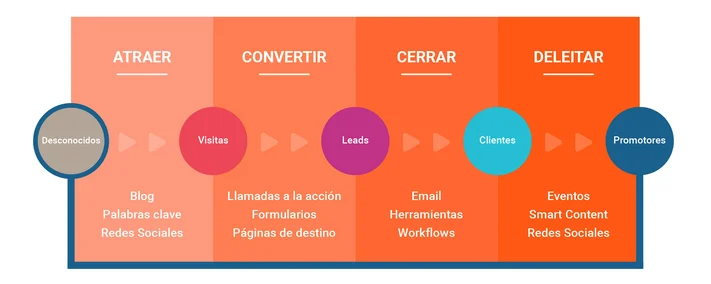
The inbound methodology consists of several phases that guide potential customers through a marketing funnel, from attraction to conversion and loyalty. The main phases of inbound marketing are:
1. Attraction
The first step in any marketing strategy is to attract users to your website or content.
To achieve this, various digital marketing techniques are used, such as SEO (search engine optimization), content marketing, and social media.
The key is to create quality content that solves problems or answers questions that your potential customers may have.
Additionally, it is important to use relevant keywords in your content to make it easier to find in search engines.
It is also crucial to promote your content on social media to reach more people.
Another way to attract users is through paid ads, such as Google AdWords or on social networks like Facebook and Instagram.
These ads can target a specific audience that is interested in your products or services.
In summary, attraction is the first step to capturing users‘ attention and bringing them to your brand.
It is crucial to create excellent content and use digital advertising techniques to stand out in an increasingly competitive market.
Once attracted, you can convert these users into loyal customers through effective marketing strategies.
2. Conversion
After attracting visitors to your website, the next step is to turn them into leads, that is, potential customers who have expressed interest in your product or service.
This is achieved through contact forms, landing pages, and effective calls-to-action (CTAs).
It is crucial to offer something of value in return, such as an ebook, a guide, or a webinar.
3. Closing
Turning leads into customers is the goal of the third phase. For this, it is essential to use email marketing strategies, campaign automation, and inbound marketing tools like MailCPU.com software.
Personalizing communications and segmenting leads based on their behavior and demographics significantly improves conversion rates.
4. Loyalty
The inbound marketing process does not end when a sale is closed. Customer loyalty is vital for long-term success.
Providing continuous valuable content, maintaining effective communication, and offering excellent customer service are key aspects to turning customers into promoters of your brand.
Additionally, customer loyalty increases retention, reduces acquisition costs, and improves the company’s reputation.
Loyal customers are more likely to make repeat purchases, recommend the brand to others, and defend it in case of criticism.
To foster customer loyalty, it is important to understand their needs and preferences, offer exclusive promotions, loyalty programs, satisfaction surveys, and maintain constant communication through various channels such as social media, emails, and messaging services.
Customer loyalty is not an instant process; it requires time, effort, and dedication. However, the long-term benefits far outweigh the work invested.
It is important to remember that a satisfied customer is the best advertisement for your company and can become one of your greatest assets.
Subscribe to OnlyNiches.NET for as little as €30/month and start scaling your website today.
Inbound Marketing Strategies or Stages of the Inbound Marketing Methodology
1. Creation of Quality Content
Content is the core of inbound marketing. Creating high-quality content that addresses specific problems of your buyer personas (ideal customer profiles) is essential.
This includes blogs, videos, infographics, podcasts, and ebooks, among other formats. The content should be optimized for SEO and shareable on social media.
Moreover, it’s important that the content is original, relevant, and up-to-date. You need to research and understand the needs and desires of your audience to create content that is useful and valuable to them.
To maintain content quality, it’s fundamental to have an editorial calendar and plan topics and formats in advance.
Additionally, it’s crucial to track results and analyze the performance of each piece of content to continuously adjust and improve your strategy.
Remember, the goal of good content is to attract, educate, and convert your prospects into customers.
Therefore, it’s essential that the content aligns with your marketing strategy and generates value for your audience.
In summary, creating excellent content is a fundamental part of any inbound marketing strategy.
Dedicate time and resources to produce relevant, useful, and engaging content for your audience and see how your brand positions itself as a reference in your industry.
2. Search Engine Optimization (SEO)
SEO is essential in any attraction marketing strategy. Optimizing your website and its content for search engines is key to attracting organic traffic.
This involves researching and using keywords, creating high-value content, and improving your website’s structure.
3. Use of Social Media
Social media platforms are an effective means to disseminate content and capture the attention of your audience.
Platforms like Facebook, Twitter, LinkedIn, and Instagram allow you to interact directly with your followers, share content, and drive traffic to your website.
4. Email Marketing and Automation
Email marketing remains one of the most effective strategies for converting leads into customers.
Using marketing automation allows you to send personalized and segmented messages based on user behavior. Tools like MailCPU.com are useful for managing these campaigns.
5. Landing Pages and Calls-to-Action
Well-designed landing pages and clear, persuasive calls-to-action (CTAs) are essential for converting visitors into leads.
Landing pages should be optimized for conversion, offering something of value in exchange for the user’s contact information.
6. Content Strategy
Content strategy is a crucial component of inbound marketing.
It involves planning, creating, and distributing content that attracts and converts your target audience.
An effective strategy is based on a deep understanding of your buyer personas and the creation of content aligned with their needs and preferences.
7. Integrated Marketing and Sales
The success of inbound marketing depends on the integration between marketing and sales teams.
This alignment, known as “smarketing,” ensures that both areas work together to achieve common goals.
Constant communication and collaboration between marketing and sales improve lead generation and customer conversion.
8. Analysis and Continuous Improvement
Inbound marketing is a continuous process of analysis and improvement.
Using analytical tools like Google Analytics allows you to measure the performance of your strategies and make necessary adjustments to optimize results.
EXAMPLES OF INBOUND MARKETING. HOW TO DO INBOUND MARKETING
HubSpot Case
HubSpot is an excellent example of how inbound marketing can transform a business.
By creating educational content such as blogs, ebooks, and webinars, and using marketing automation tools, HubSpot has managed to attract and convert thousands of customers worldwide.
Cyberclick Case
Cyberclick has successfully implemented inbound marketing campaigns, focusing their efforts on creating extraordinary content and using SEO techniques to attract organic traffic.
Additionally, they use automation tools to personalize their communications and improve lead conversion.
MailCPU.com Case
MailCPU is one of the best tools for automating email marketing to your clients.
With very affordable prices and tools for automation and database email curation, you can reach your audience with minimal effort.
Undoubtedly, it is the best tool for Inbound Marketing.
Advantages of Digital Inbound Marketing
- Increase in Organic Traffic: By creating SEO-optimized content, you attract users who are interested in your products or services organically.
- Generation of Quality Leads: Attracting users who are already interested in your offer increases the quality of the leads generated.
- Improvement of Customer Relationship: Providing useful and relevant content enhances the perception of your brand and builds long-lasting relationships.
- Cost-Effectiveness: Compared to outbound marketing, inbound marketing is more cost-effective and offers a higher return on investment (ROI).
- Measurement and Optimization: Analytical tools allow you to measure the success of your strategies and make adjustments for continuous improvement.

Frequently Asked Questions
What is inbound and outbound marketing?
Inbound marketing is a strategy that focuses on attracting potential customers through valuable and useful content, such as blogs, social media, SEO, and email marketing, with the goal of generating interest and fostering audience loyalty.
On the other hand, outbound marketing is a more traditional strategy that relies on direct advertising, such as TV ads, radio spots, direct mail, and cold calls, with the aim of reaching a broader audience and generating quick sales.
What are the differences between inbound marketing and content marketing?
Inbound marketing and content marketing share similarities but also have important differences. Here are some key distinctions:
- Focus: Inbound marketing centers on attracting potential customers by creating extraordinary content that is relevant and useful, aiming to convert them into customers. Content marketing focuses exclusively on creating and distributing great and engaging content to attract the audience and generate interest in the brand.
- Objectives: The main goal of inbound marketing is to attract, convert, close, and delight customers through valuable and tailored content. Content marketing, however, focuses more on lead generation and building relationships with the audience through exceptional content.
- Strategies: Inbound marketing employs various strategies such as SEO, content marketing, email marketing, and marketing automation. Content marketing primarily focuses on creating and distributing engaging content across different channels like blogs, social media, and videos.
In summary, while inbound marketing and content marketing share similarities, each has a different focus and objectives, as well as specific strategies that make them unique.
Both strategies are complementary and can be used together to achieve better results in an overall digital marketing strategy.
What is the main objective of inbound marketing?
The main objective of inbound marketing is to attract and convert future customers by creating valuable and meaningful content that resonates with the target audience, aiming to establish a long-term relationship of trust and loyalty.
Instead of interrupting users with intrusive advertising, inbound marketing seeks to naturally attract customers who want to buy your product or service through the creation of high-quality, useful content.
How to sell through inbound marketing?
To sell through inbound marketing, follow these steps:
- Define your target audience: Identify who your potential customers are and what interests them. Conduct market research to understand their needs and desires.
- Create valuable and high-quality content: Generate content that is useful, informative, and educational for your audience. This can include blogs, videos, infographics, ebooks, and more.
- Optimize your website for SEO: Use relevant keywords on your website to make it easier for users to find you in search engines.
- Utilize social media: Promote your content on social media to reach a larger audience and engage with your followers.
- Offer free content in exchange for information: Create landing pages with downloadable content in exchange for users’ contact information. This will allow you to generate leads and nurture them throughout the buying process.
- Implement an email strategy: Send designed and segmented emails to your leads to keep them interested in your products or services.
- Constantly analyze and optimize: Use analytical tools to measure the performance of your inbound marketing strategy and make adjustments based on the results obtained.
Conclusion
Inbound marketing is a powerful methodology that enables businesses to attract, convert, close, and retain customers effectively.
By focusing on creating high-value content and personalizing communications, inbound marketing not only enhances lead generation and customer conversion but also builds long-term relationships and promotes customer loyalty.
Implementing an inbound marketing strategy requires time and effort, but the long-term benefits make it worthwhile.
From attracting organic traffic to converting leads into customers and retaining them, inbound marketing is an essential tool in the arsenal of any digital marketing professional.
Start implementing your inbound marketing strategy today and discover how it can transform your business!

Eduardo Medina
Eduardo Medina es programador y SEO, con más de 20 años de experiencia en ambos campos. Desde 2024 escribe post para OnlyNiches.NET en el que enseña a los usuarios a posicionar su web y su marca en los motores de búsqueda y redes sociales. En un mundo tan cambiante, hay que estar siempre aprendiendo y reinventándose.


Leave a Reply
Want to join the discussion?Feel free to contribute!