
How to create a customer journey map for your SEO strategy?
Understanding the customer journey is essential for any reputable marketing strategy.
Not only does it help us understand the journey a customer takes before making a purchase, but it also optimizes our actions to better meet their needs at each touchpoint.
In this article, we will delve into how you can create an effective customer journey map to enhance your SEO strategy.
What is the customer journey?
The customer journey, or “customer journey”, is the visual representation of every experience and interaction that your ideal customer has with your brand, from the first contact to post-sales.
This concept is crucial for understanding and improving the buying experience and, consequently, maximizing customer satisfaction and loyalty.
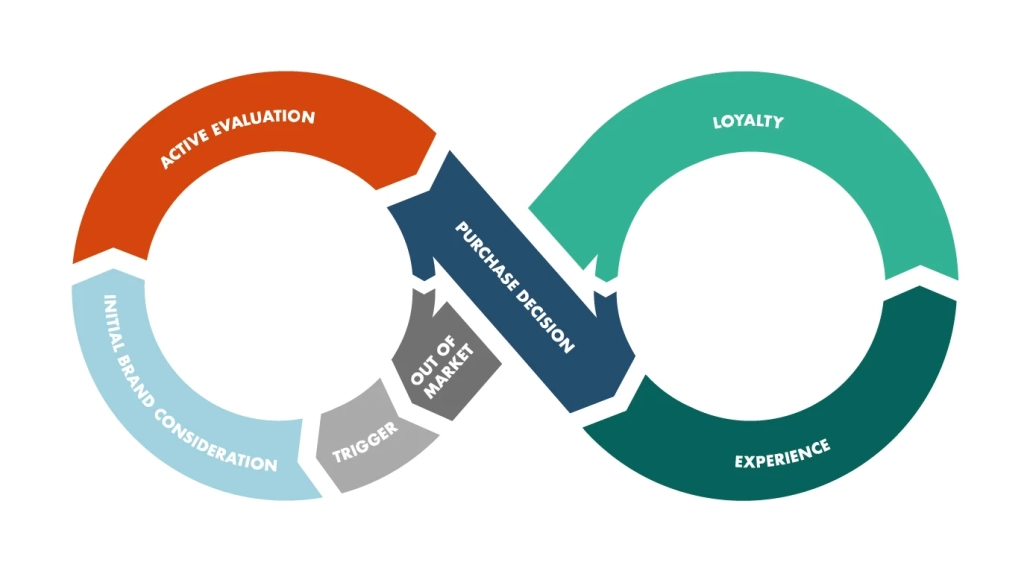
The customer journey is divided into different stages, which may vary depending on the type of product or service you offer, but generally include:
- Awareness: The customer realizes that they have a need or problem that needs to be resolved.
- Research: The customer seeks information about possible solutions to their need.
- Consideration: The customer evaluates different options and compares features and prices.
- Decision: The customer chooses the best option and makes the purchase.
- Post-sale: The customer evaluates the purchase experience and decides whether they will buy again.
Throughout this journey, it is important that the brand is consistent in its communication, both in the message and in the image it conveys.
Additionally, it is key to offer a personalized and satisfying shopping experience to convert customers into loyal followers of the brand.
Subscribe to OnlyNiches.NET from just 30€/month and start scaling your website from today.
Customer Journey Phase for Creating a Customer Journey Map
Awareness Phase
In this stage, the customer identifies a need. It is crucial to create content that captures their attention, such as blogs, infographics, and social media posts.
Additionally, it is important to highlight the benefits of your product or service and how it can solve their problem. You must also ensure that your brand remains relevant and present in the potential buyer’s mind.
During this phase, it is essential to educate the customer about your brand and what sets it apart from the competition.
You can use marketing strategies such as content marketing, social media marketing, and influencer marketing to reach your target audience.
It is important to remember that at this stage the customer is not yet ready to buy, so the focus should be on creating awareness and generating interest in your brand.
This stage is crucial for establishing a relationship with the potential customer and guiding them toward the next phase of the purchasing process.
Consideration Phase
Here, the customer evaluates different products or services. Provide comparisons, testimonials, and case studies to help them make an informed decision.
During this phase, it is important for the company to ensure that the information provided to the customer is clear, relevant, and easy to understand.
Unique features and benefits of the product or service should be highlighted, as well as how they can solve the customer’s problems or needs.
Furthermore, it is crucial for the company to have testimonials from satisfied customers and case studies that demonstrate the success and effectiveness of their goods or services.
These social proofs are crucial for building the customer’s trust and aiding them in making a purchase decision.
During this phase, the company can also offer demonstrations, free trials, or product samples so the customer can experience it for themselves and assess its quality.
This will help reinforce the customer’s positive perception of the product or service and increase the chances of making a purchase.
In summary, during the consideration phase, the company should provide relevant and persuasive information, testimonials from satisfied customers, case studies, and opportunities to test the product.
All with the aim of helping the customer make an informed and positive decision about the purchase.
Decision Phase
The customer chooses and purchases your good or service.
Facilitate the buying process with an intuitive user experience and efficient customer service.
During this stage, it is important to be available to answer any questions or concerns that may arise, whether through online chat, social media, email, or phone.
Additionally, it is essential to offer various payment and shipping options to suit the customer’s preferences and needs.
Moreover, it is key to seize this opportunity to offer complementary products or special promotions that may capture the customer’s attention and increase the value of the purchase.
Finally, once the purchase has been made, it is important to maintain constant communication with the customer to inform them about the status of their order and ensure they are happy with their purchase.
This will help foster customer loyalty and generate positive recommendations for your brand.
Retention Phase
After the purchase, it is important to ensure that the customer is satisfied.
Offer post-sale support and valuable content to maintain their interest.
Additionally, it is important to stay in touch with the customer, whether through email, social media, or any other means of communication.
You can send them special promotions, reminders of related products, or simply thank-you messages for their purchase.
The retention phase is crucial for fostering customer loyalty and ensuring that they will shop with you again in the future.
It is also an opportunity to gather feedback on their purchase experience and improve based on their comments.
Don’t forget that a satisfied customer not only returns to buy again but also recommends your business to other potential customers.
Therefore, investing in the retention phase is fundamental for the long-term growth and success of your business.
Loyalty Phase
A satisfied customer can become an advocate for your brand. Encourage this loyalty with loyalty programs and rewards.
Once we have achieved a customer’s satisfaction with the purchase of a product or service, it is important to maintain that relationship over the long term.
The loyalty phase is crucial to ensure that the customer continues to buy our products or use our services in the future.
An effective way to foster customer loyalty is through loyalty programs.
These programs offer incentives and rewards to customers who continue to purchase our goods or services repeatedly.
This can include exclusive discounts, special promotions, personalized gifts, among others.
Moreover, it is important to maintain constant communication with our customers to remind them that we value their loyalty and are committed to providing them with excellent service.
This can include sending personalized emails, satisfaction surveys to learn their opinions, or thank-you messages for their preference.
In summary, the loyalty phase is essential to maintaining a long-term relationship with our customers.
By fostering loyalty through loyalty programs and rewards, we can turn our satisfied customers into advocates for our brand, which will help us increase our customer base and strengthen our reputation in the market.
The Importance of a Customer Journey Map in SEO
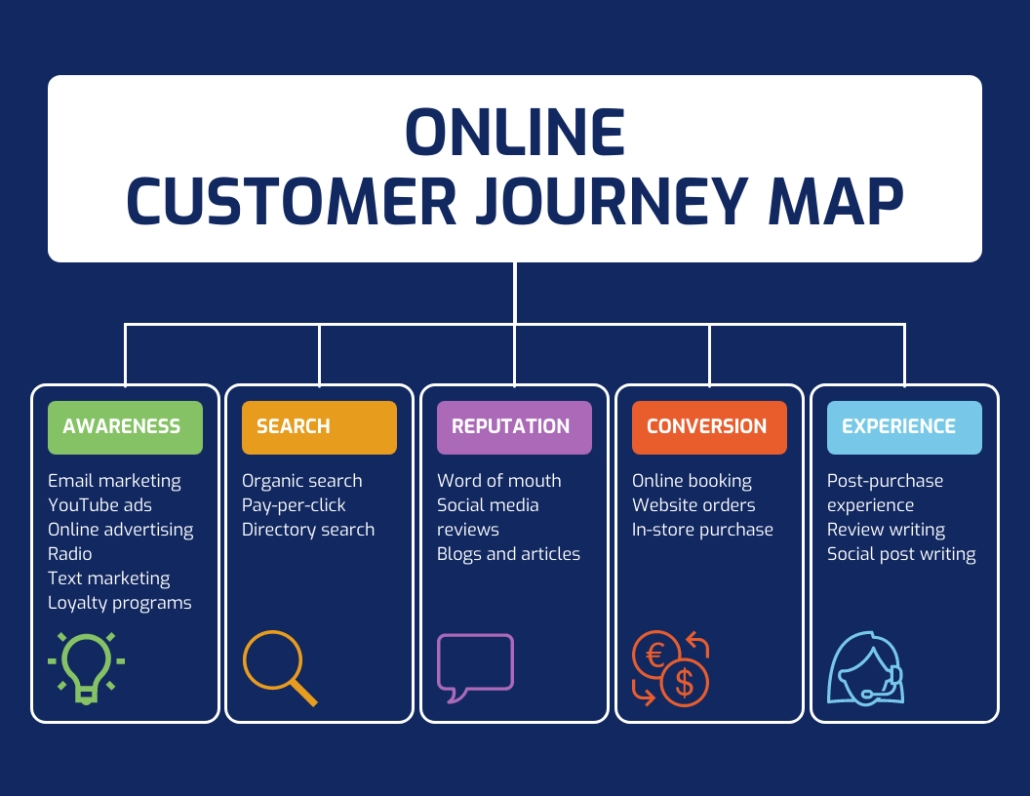
Creating a customer journey map allows you to identify each phase of the customer journey, from awareness to the decision to purchase a good or service.
By understanding these phases, you can optimize your website and content for the specific searches that users perform at each stage, thereby improving your visibility in search engines and the user experience.
Benefits of the Customer Journey Map for the Customer Experience
- Identification of Touchpoints: Knowing at which moments and through which channels customers interact with your brand.
- Content Optimization: Creating specific content for each stage of the customer journey.
- Improvement of the Customer Experience: Ensuring that each interaction is positive and that the customer feels valued.
- Increase in Conversions: Understanding the conversion process to better guide customers towards making a purchase.
Subscribe to OnlyNiches.NET from just 30€/month and start scaling your website from today.
How to Create a Customer Journey Map
Creating a customer journey map requires a meticulous and detailed approach. Here is a step-by-step guide:
Step 1: Define Your Buyer Persona
Before you draw any map, you need to know for whom it is intended. Clearly define your buyer persona: understand their needs, problems, and how your product or service offers the perfect solution.
This will help you anticipate their buying behaviors and decisions at each stage of the process.
Step 2: Identify the Customer Journey
Generally, the customer journey is divided into several key phases:
- Awareness: The customer discovers a need or problem.
- Consideration: Searches for and compares solutions.
- Decision: Chooses and makes the purchase.
Each of these phases will include different touchpoints with the customer, such as visits to the website, interactions on social media, or calls to customer service.
Step 3: Map the Touchpoints
Use tools like interviews or surveys to collect data on how and where your potential customers seek information.
Then, create a map detailing each touchpoint in the customer journey, from reading a blog to speaking with a salesperson.
Identify the different channels used by your target audience, whether it be social media, emails, online ads, etc., and make sure to include all key touchpoints in the purchase process.
Once you have all the touchpoints identified, you can clearly visualize the complete journey a customer takes from the start of their search to conversion.
This will allow you to optimize your marketing and sales strategies, ensuring you reach your audience at the right moments and places to increase conversion chances.
Step 4: Analyze Needs and Behaviors at Each Phase
Understanding what your customer is looking for at each step of the customer journey is vital.
For example, in the consideration stage, a customer might be looking for product comparisons, while in the decision stage, they might need reassurance about the quality of after-sales service.
Additionally, it’s important to analyze how customers behave in each period.
For instance, during the analysis period, customers are likely to spend more time researching and comparing options, while in the decision phase, they are likely to be more willing to interact with the sales team.
By understanding these needs and behaviors, you can design specific strategies and actions for each stage of the customer journey, which will help you more effectively meet your customers’ needs and increase conversions.
It will also allow you to identify potential friction points in the process and find opportunities to improve the customer experience.
Step 5: Optimize Your Content for SEO
Align your content with search intentions at each step of the journey. Use strategic keywords that correspond to each stage of the buying process.
For instance, for the evaluation stage, you might focus on terms like “benefits of [*product*]” or “comparison between [*product A] and [*product B*]”.
Also, make sure to include relevant internal and external links in your content to enhance the authority of your website.
You can also add alt tags to your images and optimize your site’s loading speed to improve your ranking in search results.
Another important strategy is to create evergreen content, which remains relevant over time and continues to draw traffic to your site.
This can include guides, tutorials, or in-depth analyses on topics related to your industry.
Don’t forget to use engaging meta descriptions and persuasive titles to improve the click-through rate (CTR) of your search engine results.
Remember, the goal is to attract quality traffic to your website and convert those visitors into leads.
In summary, optimizing your content for SEO is a fundamental part of your digital marketing strategy.
By following these tips and maintaining a focus on the needs and queries of your potential customers, you can significantly improve your search engine rankings and increase the visibility of your brand online.
Step 6: Use Feedback to Improve the Experience
The map is not static. You should review and adjust it based on customer feedback and behavior.
This includes adjusting your SEO strategies based on what works and what doesn’t, always with the goal of improving the buying process.
It is important to keep an eye on metrics and analytics to see how customers interact with your website and which areas may need improvement.
If you receive direct customer feedback about difficulties in navigation or the purchasing process, take them into consideration and look for ways to resolve those issues.
Additionally, you can also conduct surveys and market studies to get more information about what customers value and expect from your online store.
With this feedback, you can make adjustments in design, navigation, products offered, pricing, among other aspects to optimize the customer experience.
Remember, providing a satisfying shopping experience is crucial for attracting and retaining customers, so it is important to always be attentive to how you can improve and adapt your website in response to consumer needs and preferences.
With a continuous focus on optimization and active listening to customers, you can keep your online business relevant and competitive in the market.
Tools for Creating Your Customer Journey Map
Today, there are various management software options that can facilitate the creation of your map, from design software to specific marketing platforms like HubSpot or Miro.
These tools allow you to add data, integrate feedback, and better visualize interactions and the customer journey to improve the customer experience.
- Miro: Ideal for creating collaborative visual maps.
- Asana: Perfect for managing projects and tracking the progress of your strategies.
- HubSpot: Offers comprehensive tools for marketing and sales.
- QuestionPro: Useful for collecting customer feedback and analyzing data.
Example of a Customer Journey
An example of creating a Customer Journey template could be as follows, covering the entire buyer’s journey:
- The customer searches the internet for information about a specific product they need.
- They find an online store that sells the product and decide to make a purchase.
- They browse the store’s website to view the different product options, prices, and features.
- They add the product to the shopping cart and proceed to the payment page.
- During the payment process, the customer registers as a user to facilitate future purchases.
- They make the payment securely and receive a purchase confirmation by email.
- The product is shipped, and the customer receives updates on the status of their shipment.
- Finally, the customer receives the product, uses it, and is happy with their purchase.
In this example, the Customer Journey includes all the interactions and touchpoints that the customer has with the brand from searching for the product to making the purchase and receiving the product.
Each step in the purchasing stage is an opportunity for the brand to offer a positive experience to the customer and earn their loyalty.
Conclusion
Creating a customer journey map for your SEO strategy will not only improve the visibility of your website but will also help you better understand and meet the needs of your customers at each stage of the purchasing process.
By focusing on improving the user experience and optimizing each touchpoint, you will not only attract more visitors but also convert them into loyal customers.
Remember, the success of your SEO strategy is based on a deep understanding of your customer’s journey and how they interact with your product or service at each phase of the customer journey.

Eduardo Medina
Eduardo Medina es programador y SEO, con más de 20 años de experiencia en ambos campos. Desde 2024 escribe post para OnlyNiches.NET en el que enseña a los usuarios a posicionar su web y su marca en los motores de búsqueda y redes sociales. En un mundo tan cambiante, hay que estar siempre aprendiendo y reinventándose.


Leave a Reply
Want to join the discussion?Feel free to contribute!