
What is Anchor Text in SEO?
Anchor text is the visible and clickable text of a hyperlink.
This text is what users see and can click on to be redirected to another web page.
For example, if you see a link that says “learn more about computer science,” the text “learn more about computer science” is the anchor text.
Anchor texts play a fundamental role in SEO because they help search engines understand the context of the link and the relevance of the content it is pointing to.
Good use of anchor text can significantly improve your site’s ranking in search results.
What is Anchor Text?
It is the visible and clickable text of a hyperlink.
This text is what users see and can click on to be redirected to another web page.
For example, if you see a link that says “learn more about computer science,” the text “learn more about computer science” is the anchor text.
Anchor texts play a fundamental role in SEO because they help search engines understand the context of the link and the relevance of the content it is pointing to.
Good use of anchor texts can significantly improve your site’s ranking in search results.
Subscribe to OnlyNiches.NET from just €30/month and start scaling your website today.
Types of Anchor Text
There are several types of anchor texts, each with its own characteristics and specific uses in a link-building strategy.
Here is a list of the most common ones:
Exact Match Anchor Text
This type of anchor text uses an exact keyword that you want to rank for.
For example, if you want to rank for the keyword “leather shoes,” an exact match link would be “leather shoes.”
Brand Anchor Text
A brand anchor text includes the brand name in the hyperlink text.
For example, “Nike” would be a brand anchor text.
Generic Anchor Text
Generic anchor texts do not include any specific keyword.
Common examples are “click here” or “read more.”
Although they are not the most recommended for ranking, they can be useful in certain situations to improve user experience without appearing spammy.
URL Anchor Text
This type of anchor text uses the full URL as the link text.
For example, “https://example.com” would be a URL anchor text. This type of anchor is less common in current SEO practices.
LSI (Latent Semantic Indexing) Anchor Text
LSI anchor texts use synonyms or words semantically related to the main keyword.
For example, if your keyword is “leather shoes,” an LSI anchor text could be “leather footwear.”
Importance of Anchor Text in SEO for Your Website
Anchor text is crucial for ranking because it provides context to search engines about the content the hyperlink points to.
When Google’s search engine crawls a page and finds a link with specific anchor text, it associates that text with the content of the target page.
This helps Google determine the relevance and authority of the page in question.
Helps Google Understand Your Content
Anchor text provides important clues to Google about the content of the page it links to.
If many links point to your page with the anchor text “best practices for exercising,” Google will understand that your page is relevant to that search query, helping to achieve a good ranking on Google.
Improves User Experience
A well-chosen anchor text improves user navigation on your website.
Users can anticipate the type of content they will be directed to, enhancing usability and the overall experience on your site.
Potential for Penalties
It is important to use anchor texts appropriately to avoid penalties from Google.
Overuse of exact keywords or unnatural link-building practices can be seen as attempts to manipulate search engine results, which can result in a penalty.
Strategies to Optimize the Use of Anchor Text
Here are some effective strategies to optimize the use of anchor texts in your SEO strategy:
Diversify Your Anchor Texts
It is important to use a variety of anchor texts in your backlink creation strategy.
Don’t limit yourself to always using the same exact keyword. Include brand, generic, LSI, and URL anchor texts to create a more natural link profile.
Internal and External Links
Make sure to include both internal and external links in your content.
Internal links help distribute authority within your own website, while external links can improve your credibility and authority in the eyes of Google.
Use Relevant Keywords
When possible, use relevant keywords in your anchor texts. This not only helps search engines understand the context of the link but also enhances the content’s relevance for users.
Avoid Over-Optimization
Don’t overdo the use of exact match anchor texts.
A link profile that appears manipulated can be suspicious to Google and might result in a penalty.
Maintain a balance and ensure your links appear natural and relevant.
Use Brand Anchor Texts
Brand anchor texts not only help improve branding but are also seen as more natural by search engines. Strategically include your brand name in your links.
Subscribe to OnlyNiches.NET from just €30/month and start scaling your website today.
Examples of Anchor Text in Practice
To better illustrate how to use anchor texts, here are some practical examples:
- Exact Match Anchor Text: “Discover the best sports practices.”
- Brand Anchor Text: “Visit Nike for more information.”
- Generic Anchor Text: “Click here to learn more.”
- LSI Anchor Text: “Learn more about leather footwear.”
- URL Anchor Text: “https://example.com.”
How to Avoid Penalties When Using Anchor Texts
It is crucial to follow best practices to avoid penalties from Google.
Here are some tips to stay on the safe side:
Don’t Overuse Keywords
Excessive use of exact match keywords can be seen as keyword stuffing, which is penalized by Google.
Diversify your anchor texts to maintain a natural link profile.
Avoid Low-Quality Links
Links from low-quality or irrelevant sites can harm your SEO.
Focus on obtaining backlinks from relevant and high-authority sites.
Monitor Your Link Profile
Use tools like Ahrefs or Onlyniches.NET to analyze your link profile and ensure there are no suspicious patterns.
These tools can help you identify issues before they turn into penalties.
Maintain Relevance
Ensure your anchor texts are relevant to the content they are linking to.
This not only improves user experience but is also safer from an SEO perspective.
How to Create and Use Anchor Texts
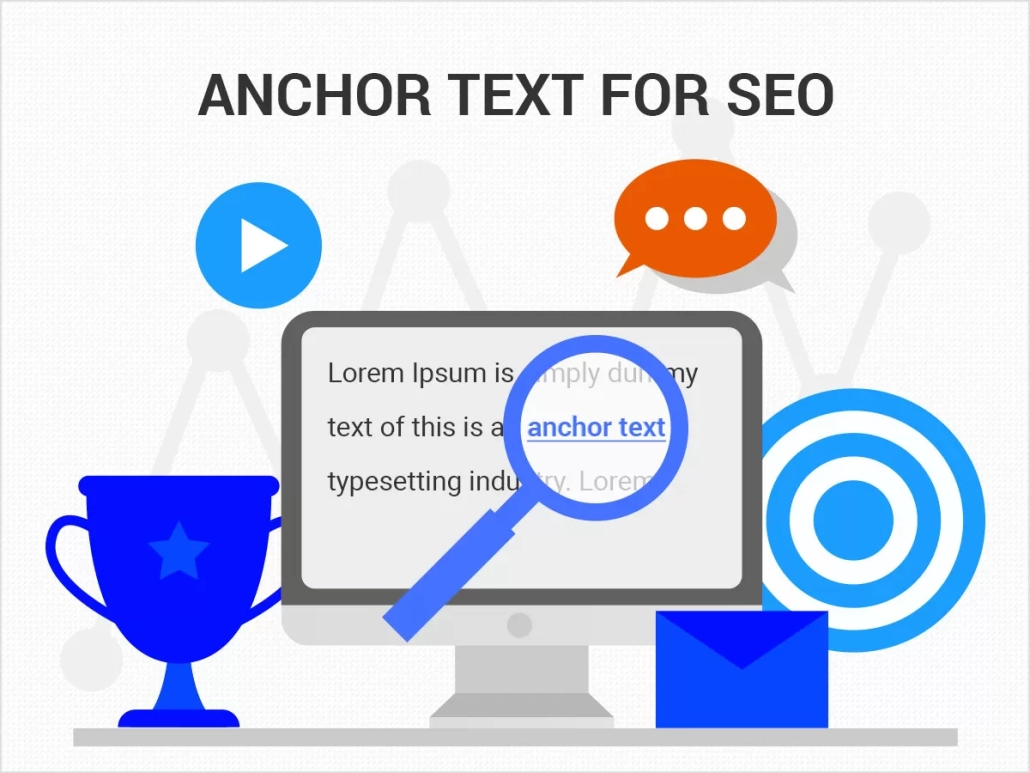
- To create anchor text, first select the relevant keywords you want to link to. These keywords should be representative of the content you are linking to.
- Next, incorporate these keywords into the link text. Typically, they are highlighted in a different color and underlined to indicate they are clickable.
- Ensure that the anchor text is concise and descriptive so users know where the link will take them.
- To use anchor texts effectively, place them in relevant locations within the content, such as in the middle of a sentence or paragraph.
- Avoid using common anchor texts like “click here” or “read more,” as they do not provide information about the link destination.
- Use this resource in a varied and diversified manner on your website to improve Google optimization and increase the relevance of your content.
- Monitor performance to see which links are receiving the most clicks and adjust your strategy accordingly.
Conclusion
Anchor text is an essential component of SEO and a powerful tool when used correctly.
By understanding the different types of anchor texts and how to utilize them in your link–building or digital marketing strategy, you can significantly improve your website’s ranking in search results.
Remember to diversify your anchor texts, maintain relevance, and avoid over-optimization practices to stay on the safe side and maximize the benefits of your SEO strategy.
Start optimizing your anchor texts today and take your SEO to the next level!
I hope this article has provided you with a clear and useful understanding of anchor text and how you can use it to enhance your SEO strategy.
If you have any questions or need more information, feel free to leave a comment.
Good luck with your SEO and happy linking!

Eduardo Medina
Eduardo Medina es programador y SEO, con más de 20 años de experiencia en ambos campos. Desde 2024 escribe post para OnlyNiches.NET en el que enseña a los usuarios a posicionar su web y su marca en los motores de búsqueda y redes sociales. En un mundo tan cambiante, hay que estar siempre aprendiendo y reinventándose.


Leave a Reply
Want to join the discussion?Feel free to contribute!